3 hr 30 min
Underground Rome: Bone Chapel & Catacombs Experience
Journey beneath Rome's surface to explore ancient burial grounds, crypts adorned with human bones, and secret Christian worship sites
Reserve
Hand-picked by our editors — only the best 5 underground experiences from 42 reviewed.
Verified partners for every tour, free cancellation where available, and instant confirmation on every booking.
3 hr 30 min
Journey beneath Rome's surface to explore ancient burial grounds, crypts adorned with human bones, and secret Christian worship sites
Reserve
3 hr 30 min
Journey beneath Rome's surface to explore bone-filled crypts and ancient Christian burial tunnels
Reserve
1 hr 50 min
Discover bone-decorated chapels and Capuchin history beneath a Roman church in this educational experience
ReservePrices from verified partners. Availability updates in real time at checkout. Free cancellation policies apply where shown.
The landmarks, rooms, and views travelers on this tour remember — all visible on a single visit.
This chapel features a painting of the Resurrection and serves as a primary site of meditation on mortality.
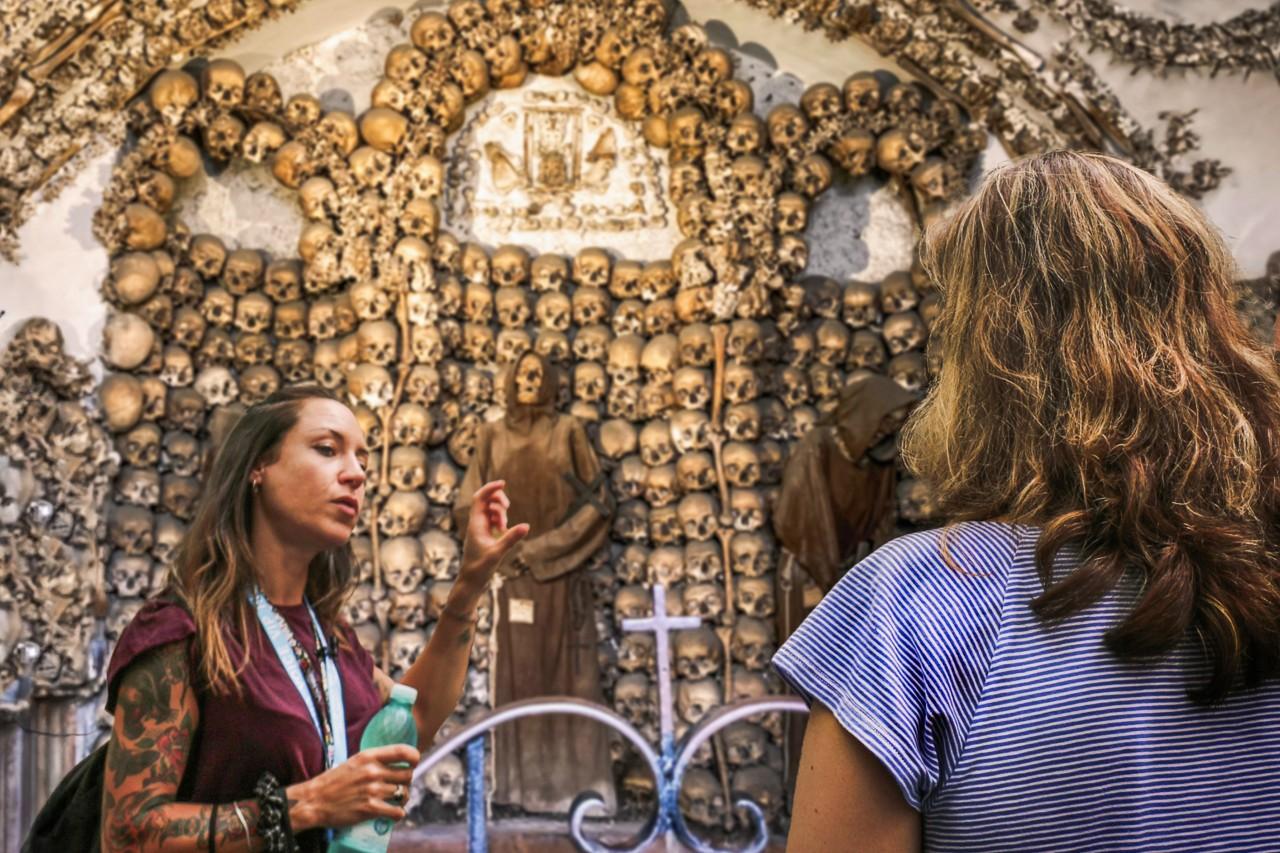
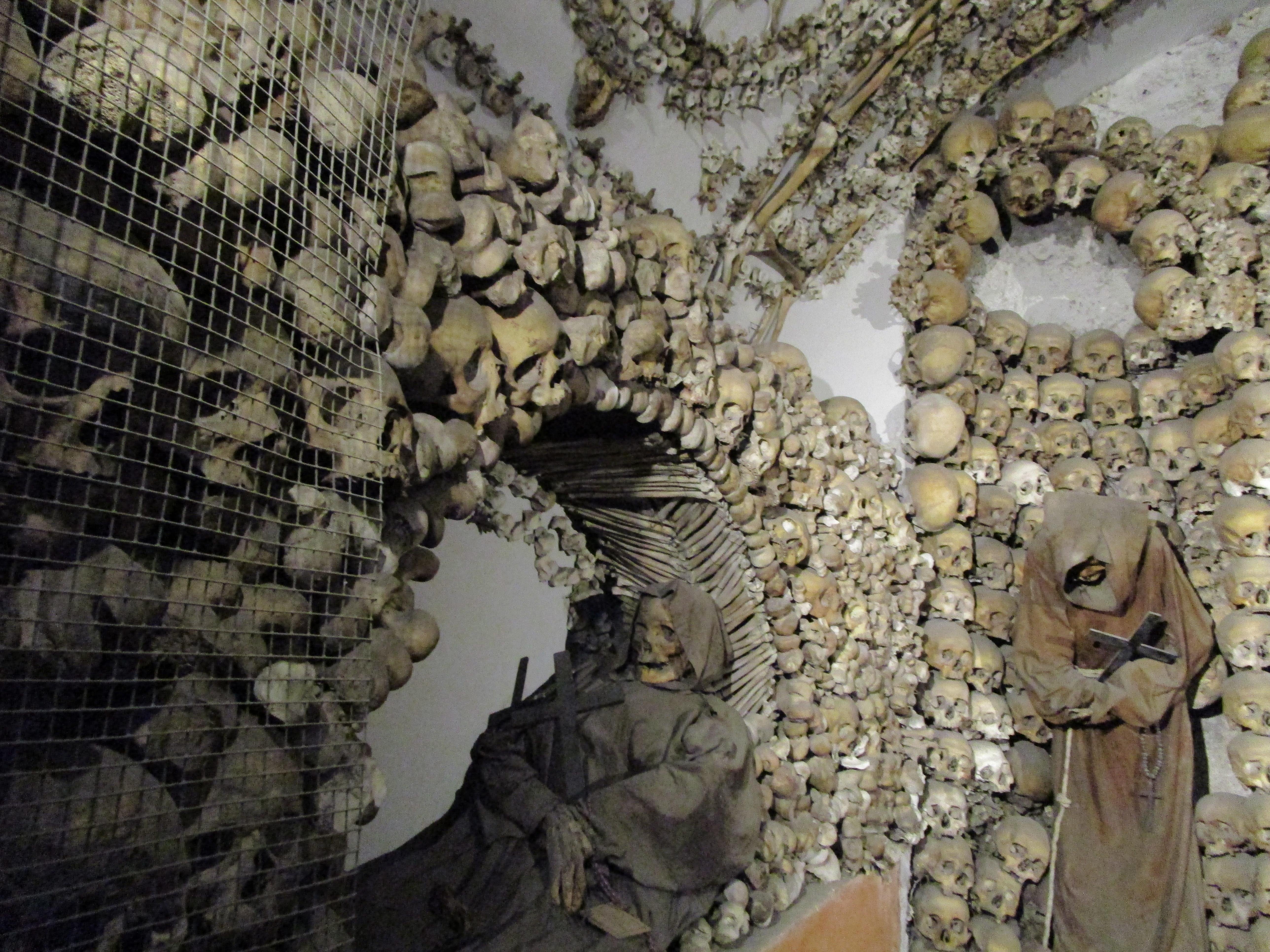
Thousands of skulls are arranged in intricate geometric patterns along the walls.
This section showcases artistic patterns formed by pelvic bones, highlighting the baroque approach to memento mori.
Femurs and tibiae are used to construct sophisticated architectural columns and arches.
This room contains full skeletons in traditional Capuchin habits, demonstrating the order's history.
They complement each other; most visitors who do both find the catacombs offer a more expansive exploration while the crypts provide an intense, concentrated encounter. Selecting the right rome capuchin crypts and catacombs tour with transfers depends on whether you prefer central urban convenience or an archaeological journey along the historic Appian Way.
| Feature | Top pick Capuchin Crypts | Roman Catacombs |
|---|---|---|
Atmosphere |
Somber and artistic | Expansive and haunting |
Accessibility |
Central city location | Requires transit travel |
Underground Experience |
Small decorated chapels | Sprawling subterranean tunnels |
Focus |
Human remains and art | Early Christian burial history |
Typical Duration |
45–60 minutes | 1.5–2 hours |
| See tickets → |
Verdict: Opt for a skip-the-line Capuchin Crypts tour if time is limited, or choose the broader rome capuchin crypts and catacombs tour with transfers tours to see both sites efficiently with coordinated logistics.
Choose your ticket, select your date, and reserve in under two minutes. Secure checkout handled by our verified partner.
Instant confirmation by email, with a mobile voucher you can save offline. No printing, no queuing at a collection desk.
Arrive at the entrance, show your voucher on your phone, and walk in. Most tickets include priority or skip-the-line access.
Practical details for your visit straight from our verified partners — hours, access, rules, and how to get there.
Conservative attire is strictly enforced as this is a consecrated religious site. Shoulders and knees must be covered for all visitors; paper gowns are provided if you are not dressed appropriately.
Bulky bags, large backpacks, and luggage are prohibited inside the Capuchin Crypts. Please utilize the free self-managed cloakroom facilities before beginning your tour.
Photography is generally not permitted inside the bone chapels to maintain the sanctity of the burial site. Respect the solemn atmosphere by keeping cameras stored throughout your visit.
Due to the historical nature of the Capuchin Crypts, access may be limited. Contact the site in advance to discuss specific needs or assistance requirements.
Families are welcome, but note that the bone-decorated chapels may be unsettling for young children. Strollers may be restricted during busy periods.
Consumption of food and drinks is strictly prohibited inside the museum and the Capuchin Crypts. Ensure all items are stored in your bag or left in the cloakroom.
Best time to go, insider tips, nearby landmarks, and the cancellation fine print — flip through to skim what matters to you.
Flexible, no hidden fees.
Flexible cancellation options are typically available for bookings involving a rome capuchin crypts and catacombs tour with transfers. Please check specific vendor terms for refund eligibility regarding the 10 EUR entrance fee.
The Capuchin Museum and Crypt opened to the public in 1870, though Capuchin friars had been arranging skeletal remains in the subterranean chambers since 1631. Five chapels beneath the Church of Santa Maria della Concezione dei Cappuccini display the bones of approximately 3,700 friars, assembled into decorative patterns, arches, and devotional tableaux across every surface. The ossuary tradition emerged from practical necessity — the friars transported cart-loads of remains from their former monastery and found creative solutions for limited burial space. What began as pragmatic conservation transformed into spiritual architecture. The Crypt of the Three Skeletons contains entire articulated skeletons in Franciscan robes. The Crypt of the Skulls features a ceiling rosette constructed from vertebrae and scapulae. Each chamber carries a distinct aesthetic grammar, executed in femurs, ribs, and pelvic bones. Beyond Via Veneto's ecclesiastical ossuary, Rome's network of early Christian catacombs extends for hundreds of kilometers beneath the southern districts. The Catacombs of San Callisto contain the burial niches of sixteen pontiffs and thousands of early martyrs along four levels of limestone galleries. The Catacombs of Domitilla preserve second-century frescoes depicting the Good Shepherd and Jonah emerging from the whale. These subterranean labyrinths served both practical and symbolic functions — Rome forbade burial within city walls, and Christians required consecrated ground for communal graves. The volcanic tufa proved ideal for carving loculi, the horizontal burial slots stacked floor to ceiling in narrow corridors illuminated by oil lamps. Rome Capuchin Crypts and Catacombs tour with transfers packages now combine both underground traditions in single-day itineraries. Operators provide motorcoach transport from central Rome to Via Appia Antica, eliminating the logistical friction of navigating between sites separated by seven kilometers. Guided experiences include the Capuchin bone chapel at Via Vittorio Veneto 27, open daily 09:30–13:30 and 14:30–18:30, with a standard conservation fee of €10 including audio guide. Catacomb visits require advance coordination with the Vatican-supervised custodians, as independent access remains restricted. The transport-inclusive model serves visitors prioritizing comprehensive underground exploration without metro transfers or taxi negotiation. Contemporary scholarship frames both sites within Rome's broader mortuary landscape. The Capuchin friars embraced memento mori aesthetics centuries before Victorian death culture. The Christian catacombs document liturgical evolution through iconographic evidence unavailable in written sources. Together, they represent distinct moments in Rome's relationship with human remains — one devotional and baroque, the other utilitarian and paleochristian, both now preserved as cultural heritage requiring structured visitor protocols and conservation oversight.
"Five chapels beneath Santa Maria della Concezione display the bones of 3,700 friars, assembled into arches and devotional tableaux across every surface."
A step-by-step walkthrough of the visit — what you'll see, how long each stage takes, and the details that matter.
You meet your group near Termini or Piazza Barberini for morning departure. The motorcoach climbs Via Veneto past embassy facades and belle époque hotels before stopping at the Church of Santa Maria della Concezione. You descend narrow stone stairs into the first crypt, where the cool subterranean air carries a faint mineral smell. The guide directs your attention to the ceiling — a chandelier constructed entirely from vertebrae and finger bones. You move through five connected chambers, each with a distinct skeletal theme. In the Crypt of the Pelvic Bones, floral patterns emerge from interlocking hip sockets. Full skeletons stand in wall niches, robed and silent. After thirty minutes underground, you return to daylight and re-board the coach. The route follows Via Appia Antica south past the Aurelian Walls and ancient Roman tombs. The driver stops at the Catacombs of San Callisto or Domitilla, depending on your booked package. A Vatican-approved guide leads your group single-file into the limestone galleries. Electric lights reveal niches carved into walls at shoulder height, once sealed with marble slabs bearing epitaphs. You pause at a third-century fresco showing a fish symbol — early Christian code predating public worship. The narrow corridors branch in multiple directions; without the guide, orientation would fail within minutes. After forty-five minutes below ground, you climb back to the Appian Way and return to central Rome by early afternoon.
The Capuchin Crypts are open Monday to Sunday, 09:30–13:30 and 14:30–18:30.
Yes, a rome capuchin crypts and catacombs tour with transfers is a popular way to see the site along with other Roman underground landmarks.
Yes, shoulders and knees must be covered at all times.
Photography is not allowed inside the Capuchin Crypts to respect the sanctity of the friars' resting place.
The 10 EUR entrance fee includes admission to the museum and the crypts along with an audio guide.
The Capuchin Crypt is located at Via Vittorio Veneto 27, 00187 Rome, Italy.
The nearest metro station is Barberini on Line A; many bus lines also serve the Via Vittorio Veneto area.
Yes, children are welcome on a rome capuchin crypts and catacombs tour with transfers, though parents should consider the nature of the bone chapels.
The best arrival window is 09:30–10:30 to avoid peak midday tour group crowds.
A typical visit to the Capuchin Crypts lasts between 30 and 45 minutes.